


Detective stories – Kaifeng 982 Solution
Congratulations! You have solved this case and found the real criminal. Justice was served!
Below you see all details of this case.
Attention! Spoiler Alert! Please do not continue to read if you did not finish the game.
—————————————————————————–
Bao was at first the prime suspect for the organization of the murder. This changed when his body was found amongst the ruins of the area destroyed by an earthquake on the same day as the murder.
According to the letter from Lian, Bao was commissioned to buy a child for her. In light of these facts, he had neither time (the location of the earthquake was too far from the capital Kaifeng), nor motive to commit the murder.
Wife – Lian Feng
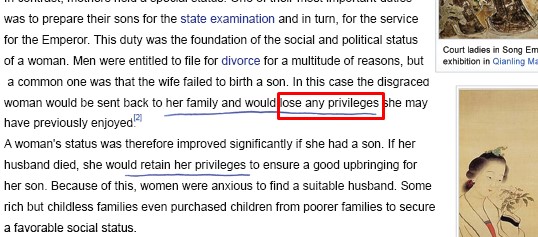
According to historical records combined with the wedding letter, Lian was born into a prestigious, wealthy family. Her husband, the Vice Chancellor Xiao Lài, owed her much but despite this, decided to divorce her. According to the Wikipedia article, this would have publicly humiliated her and forced her to return to her family without the privileges that she had enjoyed while married. Because of this she had a clear motive to kill her husband, but only after she was able to secure her position.
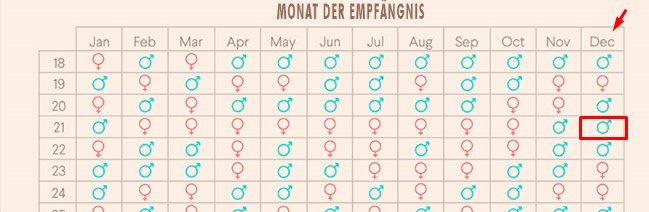
Lian needed a child, preferably a son. She was aware (Chinese birth card with Rouland 21 y. old, Zodiac`s character wooden monkey) that her husband was expecting a son from one of his concubines, Yiji, and she intended to purchase this child. She would buy the child to maintain her position and it’s benefits and would murder Lài after.

Without a child in her care, Lian’s situation would greatly deteriorate. However Bao could not accomplish what she had instructed him to do as he was killed near his destination on August 15th with both the letter and the money on him. Therefore Lian had no reason to order the murder at that time – she would have had to be patient until she had a child. Also, look closely at the coins. The coins that Lian gave to Bao are authentic, unlike the coins found on the murderer.
Der Rebell Toba
According to historical records, Toba the rebel planned the ambush and killed the leader of the Imperial army, winning him the battle. The strategy for the ambush was revealed in the coded letter Toba sent confirming the plan with an unnamed co-conspirator.
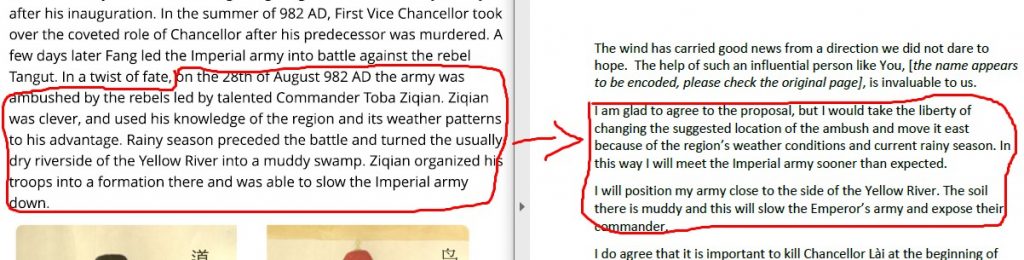
In the letter Toba expressed his intention of killing Xiao Lài in front of his army. There is no logical reason why Toba would have abandoned this idea and killed Lài before the army left, as that could have jeopardized his chance of winning the battle.
Vice Chancellor Fang Daoguang
According to both reports from the town watch, there were at least two people sent by Toba who arrived in the capital at almost the same time. One was the messenger who was found with the letter including the encoded name and the other was the preacher with the forged coin. The messenger had the encoded name, and the preacher had the key to decode it.
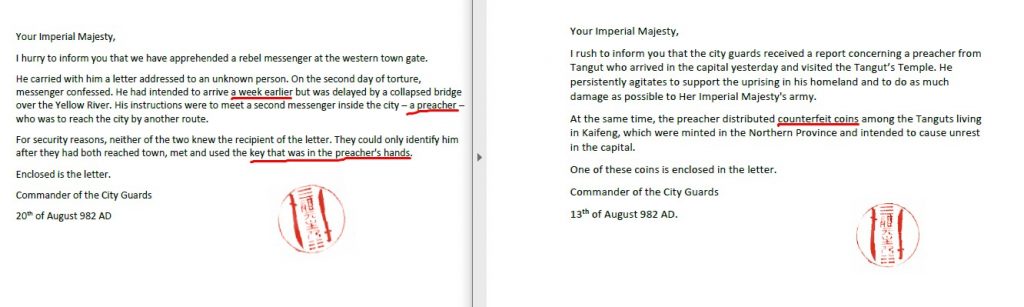
Upon close inspection of the coin, we can see two dragons. If we match the coin with the two dragons facing north (up) with the letter, we get the Chinese letters 道 方 光, which spell the name Fang Daoguang (historical record or stamp).
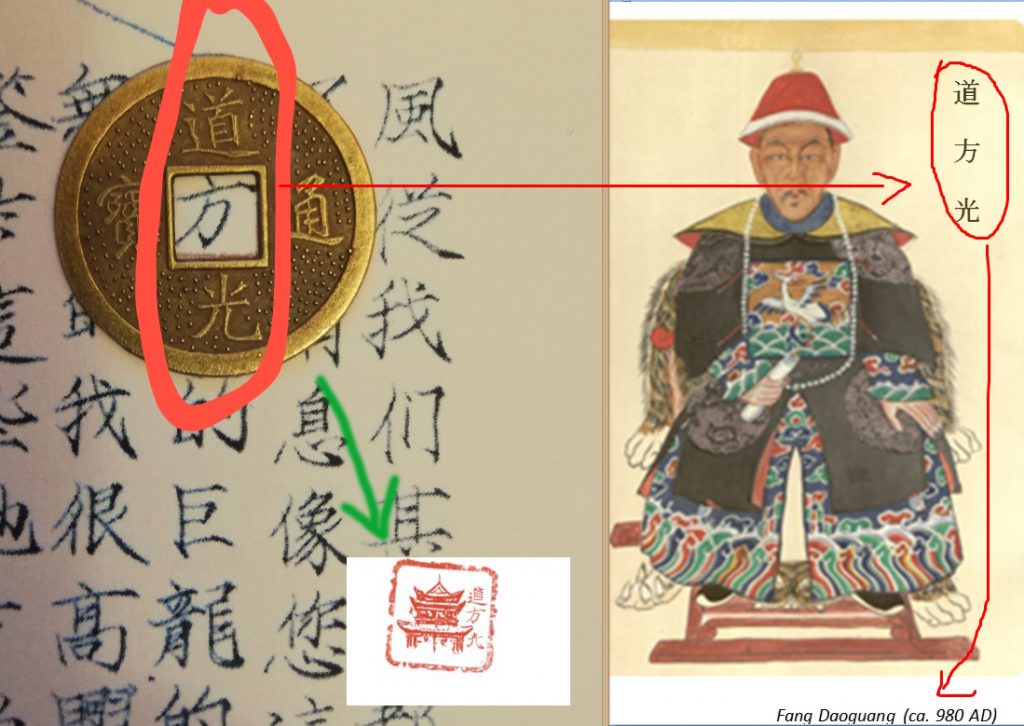
This reveals that the encoded letter was addressed to Fang Daoguang and that he and Toba were planning to kill Xiao Lài in front of his army, but each with their own motives. Toba changed the ambush plan and sent Fang a message detailing the new plan. Unfortunately the messenger was delayed by a week because of the collapsed bridge over the Yellow River, and was then captured upon reaching the city, so the letter never reached its intended recipient. When Xiao Lai was murdered and succeeded by Fang Daoguang as the leader of the army, Daoguang was unaware of the change of plans and was killed in battle. He was also caught off guard by Toba moving his army to the east with the intention of meeting Xiao earlier.
For conclusion: Toba and Fang planned the murder together, but neither had any reason to kill Xiao Lài the day before they were to leave for Tangut to carry out their ambush.
The brother, Qilian Lài
When you look at drawing of the village (www.stanleys-art.com/?sg_popup_preview_id=968) with the mountains of Qilian Shan, and then cross reference this with the map, you will discover that Xiao Lài and his brother are from Tangut.
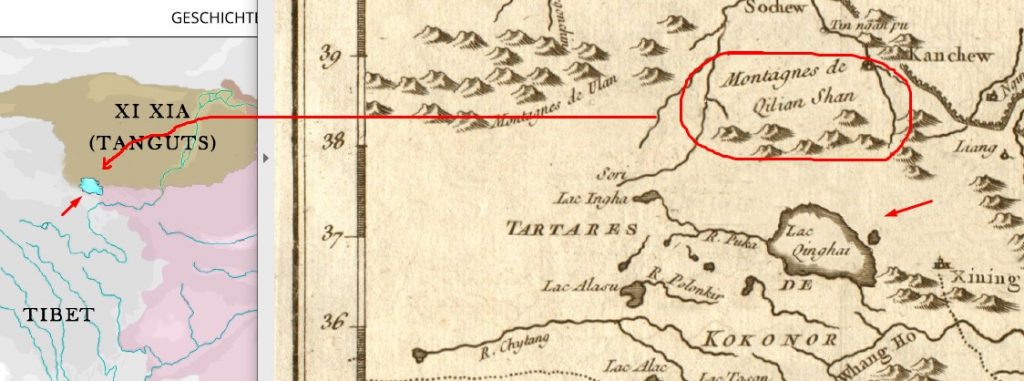
Examining Xiao Lài’s behavior toward his own country, a reason presents itself as to why the brothers had been estranged for a very long time.
Given their vastly different political views, and the fact that Xiao had a strained relationship with his country (as seen in historical records), it is possible that his brother Qilian Lài had motive to kill him just before the military operation against their homeland. However Qilian was able to prove to the guards during his interrogation that he was not involved in the murder. How was this possible?
We cannot be 100% sure of the true nature of these events, but we suspect that this was his plan: Qilian Lài planned to kill his brother before the battle to save his country from the Imperial Army. He had no knowledge of any other plans to kill Xiao.
- He made the stamp with the word „traitor“ and put his personal mark on it to avoid an investigation into who had produced it. He made it appear to be an „official“ item commissioned for a customer by creating a false order. This made the city guard believe that Qilian was being completely transparent with them and so they suspected nothing.
- He paid the killer with fake Tangut coins that the preacher distributed among Tangut temples in the capital. (You can note the differences between the real coins on Twitter and Stanley’s auction, and the fake coin in your hand).
- He forged the order for the „Traitor“ stamp. Qilian Lài was a famous master who had completed several orders for Toba before, including a personal signature stamp (as listed in the order for the ceremonial armor). It would have been easy for Qilian Lài to forge a document in Toba’s name.
- Also note the metal stamp inscribed with the word „Traitor“, which was made in the form of a metal tiger.
According to the letter addressed to the parents from 968 AD, Xiao was 26 years old at the time. This means that he and his brother were born in 942 AD which is the year of the metal tiger (zodiac calendar). This is an additional symbolic reference to the murderer.
However, it would appear that Qilian made a critical mistake – he used a kind of paper only used in Song at the time, one not available in Tangut (as mentioned in the Stanley’s auction documents about paper making).
This can be proved by comparing the two letters written by Toba dated the 1st of August. The letter about the ambush, signed with Toba’s personal stamp, is definitely authentic because it mentions historically proven facts about the battle. The second letter (ordering the „traitor“ stamp), which bears the same date, was written on different paper and using different calligraphy. It is near impossible that Toba would have written two vastly different letters on the exact same day.
In light of these facts and with the forged letter as the key piece of evidence, we can conclude that Qilian Lài very likely ordered the assassination of his brother.
The guards evidently did not notice the different paper. We will never definitively know what happened to Qilian Lài, but according to historical records he survived the events of the time unscathed, and was likely overjoyed that his country began it’s journey to independence following the battle of the Yellow River.